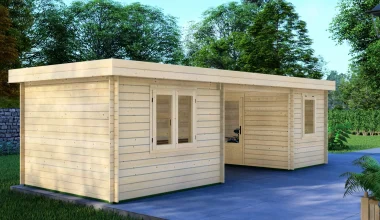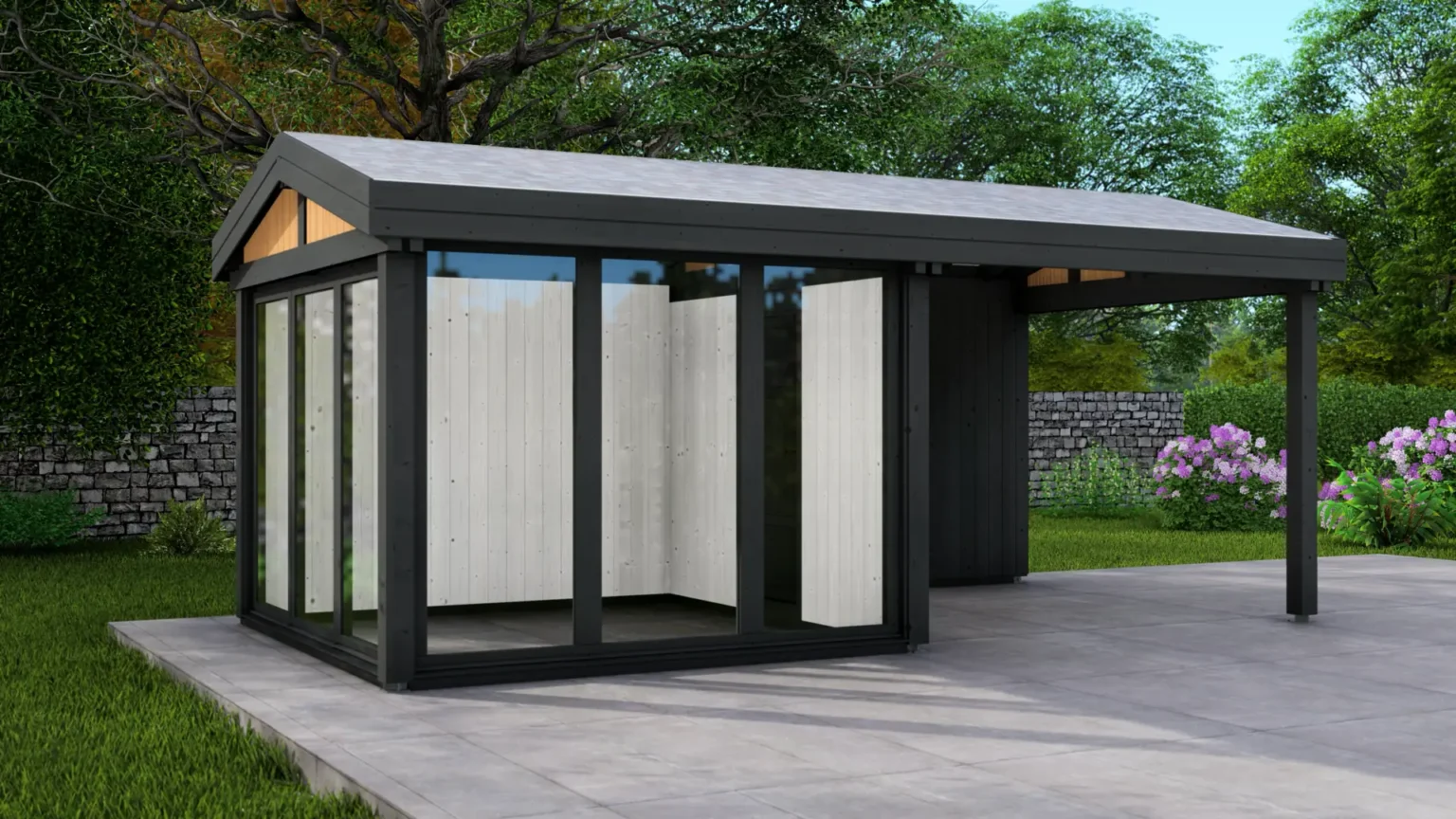
The garden building market across Europe is booming. Homeowners want functional outdoor spaces, and dealers need to stock the right product lines to meet that demand. But with summer houses, log cabins, and garden offices all competing for attention, how do you decide which type of wooden garden building is the best fit?
In this guide, we break down the three most popular garden building categories — comparing construction, use cases, sizing, and wall thickness — so you can make an informed decision whether you’re a reseller building your product catalogue or a buyer planning your next garden project.
Understanding the Three Main Garden Building Types
While all three types share a common foundation — precision-cut Nordic spruce assembled into a solid timber structure — they differ significantly in purpose, construction, and year-round usability.
Summer Houses: Seasonal Retreats and Entertaining Spaces
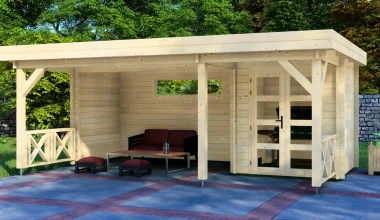
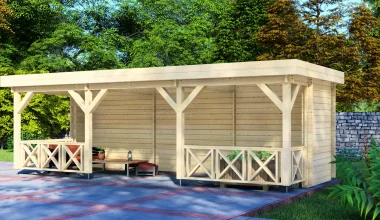
Summer houses are designed primarily for warm-weather use. They provide a sheltered, comfortable space for relaxing, entertaining guests, or enjoying your garden without full exposure to the elements. Typical features include:
- Wall thickness: 28mm–34mm (suitable for three-season use)
- Typical sizes: 6–20 m², ranging from compact retreat spaces to generous entertaining areas
- Common layouts: Open-plan with large windows or French doors for maximum light
- Best for: Garden entertaining, reading rooms, hobby spaces, seasonal guest accommodation
Summer houses are often the most accessible entry point for dealers, with strong seasonal demand from spring through autumn. Their lighter construction keeps pricing competitive while still delivering the premium feel of solid timber.
Log Cabins: Year-Round Structures Built to Last
Log cabins step up the construction with thicker walls and more robust engineering, making them suitable for year-round use — even in colder climates. Key characteristics include:
- Wall thickness: 44mm–68mm (44mm for three-season-plus use; 68mm for full year-round habitation)
- Typical sizes: 10–40 m², from compact cabins to spacious multi-room layouts
- Common layouts: Single-room, multi-room, or with integrated verandas and storage
- Best for: Home offices, guest houses, hobby workshops, additional living space
The 44mm wall thickness is the most popular choice across European markets, offering a strong balance between thermal performance and cost. For clients in northern regions or those planning heated year-round use, 68mm walls provide superior insulation and structural rigidity.
Garden Offices: Purpose-Built Workspaces
The rise of remote work has made garden offices one of the fastest-growing segments in the wooden building market. These structures are specifically designed for productivity:
- Wall thickness: 44mm–70mm (thicker walls for better insulation and sound dampening)
- Typical sizes: 8–25 m², optimised for desk space, meeting areas, or creative studios
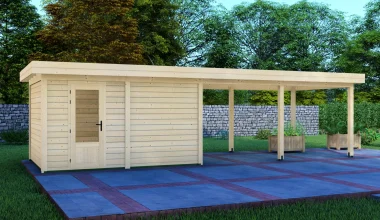
- Common features: Pre-wired for electrics, insulated floors, double-glazed windows, modern flat or pent rooflines
- Best for: Remote workers, freelancers, small business owners, creative professionals
Garden offices command premium pricing because buyers invest in a productive work environment — not just a garden feature. For dealers, this means higher margins and a clientele willing to spend on upgrades like insulation packages, electrical fittings, and interior finishing.
Wall Thickness: The Key Decision Factor
Wall thickness is arguably the single most important specification when choosing a garden building. It directly affects thermal performance, structural strength, and how the building can be used throughout the year.
| Wall Thickness | Best Use | Thermal Performance | Typical Buildings |
|---|---|---|---|
| 28mm | Seasonal / 3-season | Basic — comfortable spring to autumn | Summer houses, small shelters |
| 44mm | Extended season / light year-round | Good — retains heat with a small heater | Log cabins, garden offices, garages |
| 68–70mm | Full year-round habitation | Excellent — suitable for heated, insulated spaces | Residential cabins, premium offices |
Dealer tip: Stocking 44mm models gives you the broadest market appeal. Offer 28mm as a value option and 68mm as a premium upsell for clients who need genuine year-round performance.
Sizing and Layout Considerations
The right size depends on intended use. Here are practical guidelines:
- Under 10 m²: Compact summer houses, single-desk garden offices, storage-focused buildings. Often exempt from planning permission in many European markets.
- 10–20 m²: The sweet spot for most buyers. Comfortable for a garden office with meeting space, a summer house for entertaining, or a cosy log cabin retreat.
- 20–40 m²: Multi-room log cabins, large garden offices with separate zones, or combination buildings (e.g., office + storage). May require planning permission depending on local regulations.
Which Garden Building Should Dealers Stock?
The answer depends on your market, but here’s a practical framework:
- If you serve suburban homeowners: Lead with garden offices (high demand, premium margins) and summer houses (volume sellers in spring/summer).
- If you serve rural or lifestyle markets: Log cabins are your anchor product, with garden offices as a growing complement.
- If you want year-round sales: Garden offices sell consistently regardless of season. Pair them with log cabins for a strong all-year catalogue.
The Dadsons Advantage
At Dadsons, we manufacture all three garden building types from slow-grown Nordic spruce sourced from FSC-certified Finnish forests. Every structure is CNC-precision cut for perfect fit, flat-packed for efficient shipping, and designed for straightforward assembly.
Our dealer partners benefit from:
- A product range spanning summer houses, log cabins, and garden offices in multiple sizes and wall thicknesses
- Competitive B2B pricing with volume incentives
- Full technical documentation and assembly guides
- Custom sizing and modification options for special projects
- Direct shipping from our production facility in Latvia to your warehouse or end client
Ready to Expand Your Garden Building Range?
Whether you’re adding garden buildings to your product line for the first time or looking for a more reliable manufacturing partner, we’d love to talk. Contact our sales team for dealer pricing, product catalogues, and sample specifications. We’ll help you choose the right mix of products for your market.