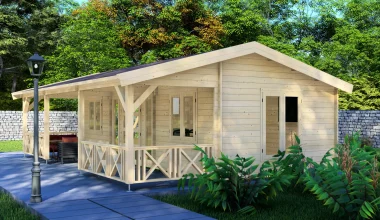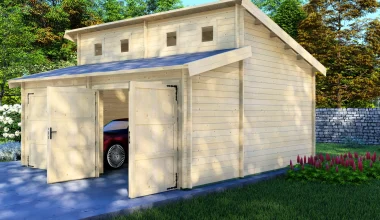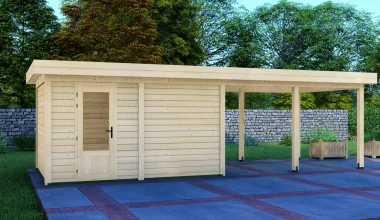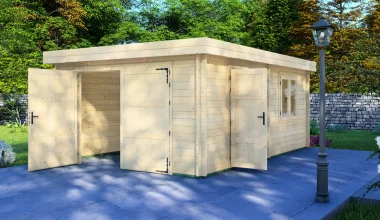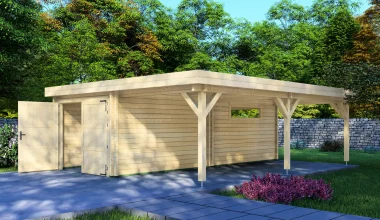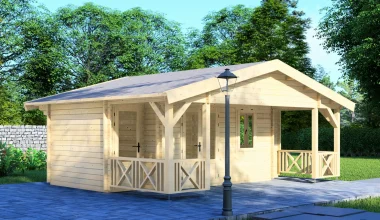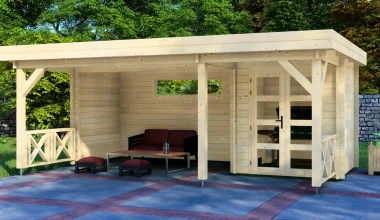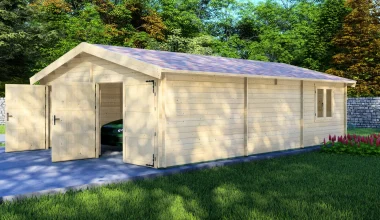
Log cabins occupy a unique position in the wooden building market. They sit between lightweight summer houses and full-scale residential construction, offering year-round usability without the complexity of a permanent build. For dealers, this makes them one of the most versatile product categories you can stock.
But not all log cabins are the same. The range spans from compact, single-room structures to spacious multi-room buildings with separate living areas, verandas, and premium finishes. Understanding these differences is essential for matching the right product to the right customer.
What Defines a Log Cabin?
The term “log cabin” gets used loosely, so let’s be precise. In the context of prefabricated wooden buildings, a log cabin is distinguished from a summer house by three key characteristics:
- Wall thickness of 44mm or greater — this is the threshold for extended-season and year-round use. Summer houses typically use 28–34mm walls.
- Robust structural engineering — heavier roof construction, reinforced corners, and thicker floor joists to handle greater loads and wider spans.
- Year-round capability — designed to retain heat, resist weather extremes, and function comfortably in all seasons when properly insulated and heated.
These features mean log cabins command higher price points than summer houses, but they also deliver greater value and versatility — which translates to stronger margins for dealers.
Standard Log Cabins: The Accessible All-Rounder
Standard log cabins are the backbone of most dealer ranges. They offer genuine year-round usability at a price point that appeals to a broad audience.
Key Specifications
- Wall thickness: 44mm interlocking Nordic spruce planks
- Floor area: Typically 10–20 m², suitable for single-room layouts
- Roof type: Apex (gable) roof as standard, providing good headroom and weather runoff
- Layout: Open-plan single room with one or two windows and a single entrance door
- Foundation: Concrete slab or timber bearer system
Ideal Use Cases
- Home office or studio workspace
- Garden retreat or hobby room
- Guest bedroom with basic furnishing
- Workshop or craft space
- Seasonal rental accommodation (Airbnb-style garden rooms)
Standard cabins are particularly strong sellers in the 12–16 m² range. This size is large enough to be genuinely functional but small enough to remain affordable and, in many European markets, exempt from planning permission requirements.
Luxury & Multi-Room Log Cabins: Premium Products, Premium Margins
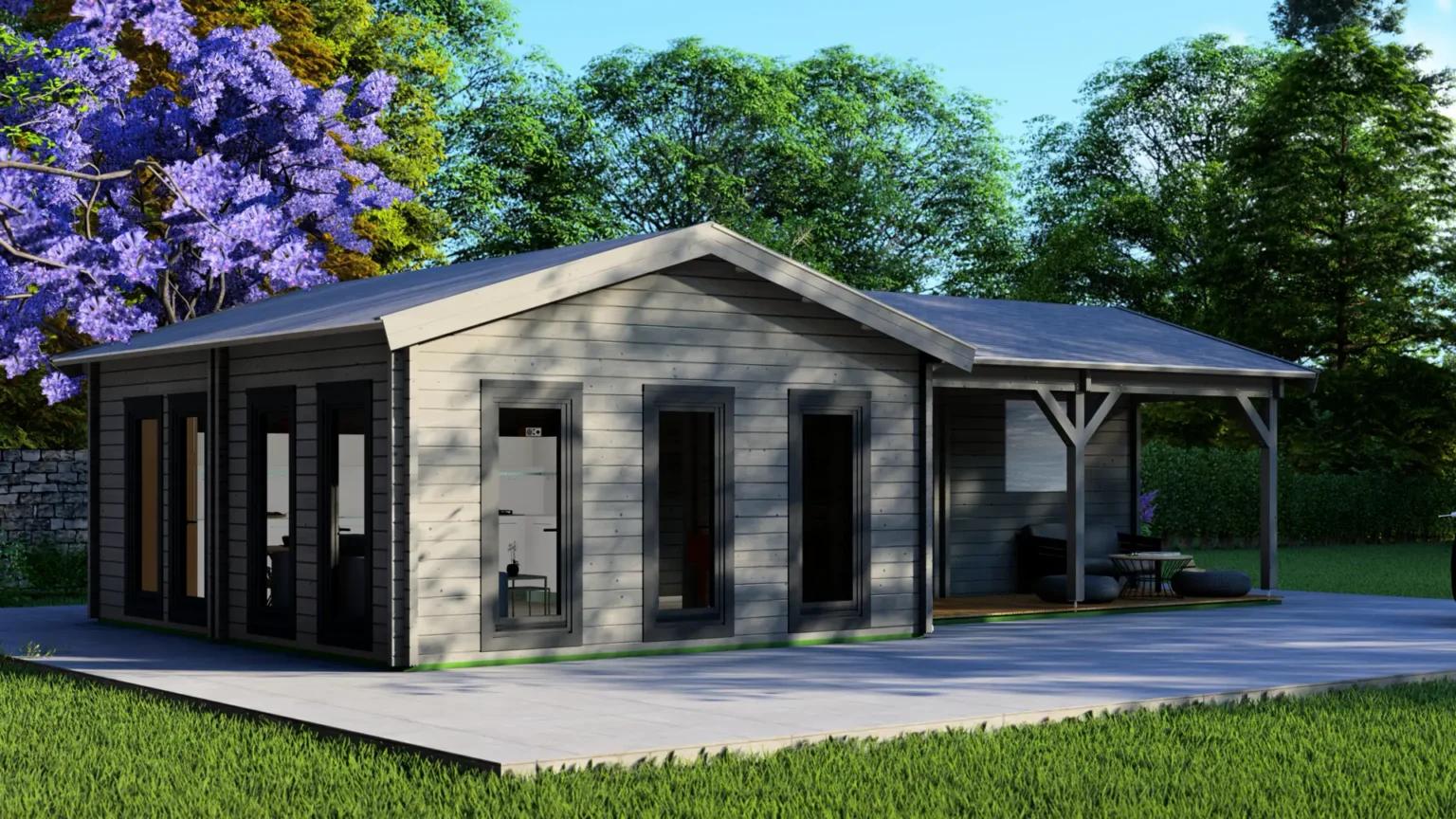
Luxury and multi-room log cabins represent the top end of the prefabricated wooden building market. These are substantial structures with separate rooms, integrated outdoor spaces, and construction quality that approaches permanent residential standards.
Key Specifications
- Wall thickness: 44mm to 68mm — with 68mm recommended for year-round heated use in northern climates
- Floor area: 20–40+ m², often with two or three separate rooms
- Roof type: Apex or modern flat roof, sometimes with extended overhangs creating covered veranda areas
- Layout: Multiple rooms — typically a main living/working space plus one or two additional rooms (bedroom, bathroom, storage, utility)
- Features: Integrated verandas, French doors, multiple window configurations, higher ceiling options
Ideal Use Cases
- Self-contained guest house or granny annex
- Holiday rental accommodation
- Large home office with meeting room
- Garden entertaining space with separate storage
- Residential annex (subject to local building regulations)
Multi-room cabins are where the real margin opportunity lies for dealers. Buyers in this segment are investing in a significant addition to their property and are typically willing to pay for quality, customisation, and premium features.
Size Guide: Choosing the Right Footprint
| Size Category | Floor Area | Typical Layout | Best For | Planning Permission |
|---|---|---|---|---|
| Compact | 10–15 m² | Single room | Home office, studio, hobby room | Often exempt (check locally) |
| Medium | 15–25 m² | Single room or 1+1 | Large office, guest room, workshop | May require permission |
| Large | 25–40+ m² | Multi-room (2–3 rooms) | Guest house, rental unit, annex | Usually requires permission |
Dealer tip: Stock a range across all three size categories. Compact models drive volume and introduce customers to your brand. Medium models are the sweet spot for value and functionality. Large models generate the highest revenue per sale and attract serious buyers.
Wall Thickness: 44mm vs 68mm
The choice between 44mm and 68mm walls is one of the most important decisions for buyers. Here’s a straightforward comparison:
44mm Walls
- Suitable for three-season use and light year-round use with supplementary heating
- Lower material cost keeps the overall price competitive
- Adequate thermal performance for temperate climates (Netherlands, Belgium, southern UK)
- The most popular specification across European markets
68mm Walls
- Genuine year-round habitation standard — comfortable even in Nordic winters
- Superior thermal insulation reduces heating costs
- Greater structural rigidity supports larger roof spans and heavier snow loads
- Better sound insulation — important for offices and guest accommodation
- Premium positioning with higher price point and stronger margins
For most dealers in Western European markets (NL, DE, UK, BE), 44mm is the default recommendation. Offer 68mm as a premium upgrade for clients who plan heated, year-round use — particularly for guest houses, rental units, and large home offices.
Planning Permission Across European Markets
Planning regulations vary significantly between countries and even between municipalities. However, some general principles apply across most European markets:
- Small structures (under 10–15 m²) are often classified as “permitted development” and may not require formal planning permission
- Placement matters: Buildings typically need to be a minimum distance from property boundaries
- Height restrictions usually apply — apex height often limited to 2.5–4m depending on jurisdiction
- Intended use affects requirements — a garden room used as a hobby space has different requirements than one used as a rental unit
Always advise buyers to check with their local planning authority before ordering. As a dealer, providing basic planning guidance for your specific market is a valuable service that builds trust and reduces post-sale issues.
Positioning Standard vs Luxury for Different Segments
Understanding your customer segments helps you stock and market the right products:
- Budget-conscious homeowners: Lead with standard 44mm cabins in the 10–15 m² range. Emphasise value, versatility, and ease of assembly.
- Home office buyers: Standard cabins with good insulation options. Focus on 12–20 m² models with large windows and modern aesthetics.
- Property investors / rental hosts: Multi-room luxury cabins. Emphasise ROI potential, guest comfort, and premium build quality.
- Lifestyle / rural customers: The full range, with emphasis on 68mm luxury models. These buyers often want the cabin to be a statement piece.
The Dadsons Log Cabin Range
Dadsons manufactures a comprehensive log cabin range covering standard, luxury, and multi-room configurations. All models are built from slow-grown, FSC-certified Nordic spruce, CNC-precision cut at our facility in Latvia.
Our dealer partners benefit from:
- 15 log cabin models across standard and luxury ranges
- 44mm and 68mm wall thickness options
- Custom sizing and layout modifications for special projects
- Complete flat-pack kits with all structural components, hardware, and assembly instructions
- Competitive B2B pricing with volume incentives
- Direct shipping from Latvia to your warehouse or end client
Explore Our Log Cabin Range
Ready to add log cabins to your product line or expand your existing range? Contact our sales team for the full product catalogue, dealer pricing, and technical specifications. We’ll help you select the right mix of models for your market.